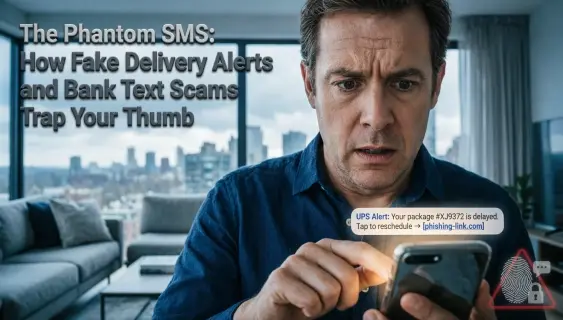
Your phone buzzes in your pocket with a quiet notification. You pull it out to find a brief text message: "USPS/FedEx: Your package delivery has failed due to an incomplete address. Update your shipping details immediately via this link to avoid return." Or perhaps a more alarming alert from your bank claiming an unauthorized transaction. Panic sparks. Your thumb twitches over the screen, ready to tap the shortcut link. But freeze right there. You are looking straight into the snare of a modern SMS phishing trap—known in the cybersecurity underworld as "smishing."
"In the palm of your hand, a text message feels intimate and trustworthy—which is precisely why cybercriminals use it to bypass your psychological defenses in under three seconds." — The Narrator
The Anatomy of a Phantom SMS: The Rise of Smishing
As the narrator observing the hidden wires of mobile communication, I have watched SMS scams morph from clumsy lottery-win notifications into hyper-targeted text campaigns. Today's fraudsters leverage automated messaging gateways to blast millions of text messages across the United States, United Kingdom, and Europe, exploiting the casual trust people inherently place in their mobile inboxes.
Unlike emails that sit unread in folders, text messages demand immediate tactile attention. When a notification flashes across your lock screen claiming your Toll Roads account has expired or your Netflix subscription is on hold, your survival instinct kicks in. Cybercriminals bank entirely on that rushed moment of anxiety, forcing you to act before you have time to think critically.
Act I: The Illusion – How Text Scammers Borrow Authority
The core mechanism of smishing relies on manipulating context. Scammers know that everyday life involves waiting for packages, paying utility bills, or checking bank balances. Therefore, they script their texts to mimic routine modern inconveniences.
Consider the story of David, an online shopper in New York, or Chloe, a busy professional in Paris. Both received sudden text alerts stating a delivery was on hold at a local sorting facility, accompanied by a link looking remarkably like an official carrier domain. The familiarity of the daily routine blinded them to the microscopic trap hidden within the text structure.
Beneath the casual tone, however, technical analysis reveals the deception: the sender ID is masked, the originating phone number belongs to an international VoIP burner service, and the hyperlink redirects to a sketchy credential-harvesting subdomain.
Act II: The Trap – Drive-By Malware and Mobile Keyloggers
Once the victim taps the shortened URL embedded in a malicious text, they are funneled through automated redirect loops designed to target mobile operating systems specifically.
The execution behind text scams typically follows two devastating pathways:
- The Fake Carrier Portal: You arrive at a pixel-perfect clone of a postal service or utility company requesting a nominal "redelivery fee" of $1.50. Entering your credit card details hands over your full billing profile to criminal syndicates.
- The Android APK Trap: For Android users, the link might prompt the download of a fake tracking app package (APK file) that secretly installs banking Trojans and intercepts two-factor authentication (2FA) SMS codes.
Act III: The Turning Point – Neutralizing Smishing with Instant Message Analysis
In every narrative of mobile security, clarity defeats chaos. When confronted with an ambiguous, pressure-filled text message, smart users do not guess—they run the text through diagnostic verification tools.
This is precisely why our platform includes an advanced **Message & SMS Scam Checker**. By pasting the suspicious text content or checking the embedded link through our automated scanning engine, the system instantly evaluates domain threats, sender reputation metrics, and known phishing patterns before your thumb can make a costly mistake.
🔍 Received a Suspicious Text? Test It Through Our SMS Scam Checker Now
Key Indicators: How to Spot a Smishing Text Like a Security Expert
To safeguard your mobile device, personal identity, and financial accounts from text-based fraud, commit these seven golden rules of mobile hygiene to memory:
- Artificial Urgency: Smishing texts rely on immediate action—claiming your account is locked today or your package is returning to sender within hours. Slow down and verify independently.
- Shortened Hyperlinks: Scammers frequently use URL shorteners (like bit.ly or random obscure domains) to mask the true destination of the malicious landing page.
- Generic References: Official institutions usually address you by your account details or name, whereas mass text spam uses cold, blanket statements like "Dear Customer."
- Inconsistent Tracking Numbers: If a delivery text provides a tracking code that doesn't match any official carrier portal, treat it as an outright fraud.
- Requests for Small Fees: Be deeply suspicious of messages demanding a tiny electronic payment to release a stuck shipment or clear a customs charge.
- Unrecognized Sender Numbers: Watch out for long, random international numbers or masked alphanumeric sender IDs pretending to be major corporations.
- Grammar & Syntax Errors: While modern scammers use AI, awkward phrasing, misplaced punctuation, and weird formatting remain classic warning signs.
Comparison Table: Legitimate Service Alerts vs. Smishing Scams
| Evaluation Metric | Legitimate Text Alert | Smishing Scam Message |
|---|---|---|
| Hyperlink Structure | Directs to the official branded domain (e.g., usps.com). | Uses shortened links or weird domains (e.g., track-usps-update.info). |
| Call to Action | Asks you to open your official app or log in manually. | Demands instant tapping on direct payment or login links. |
| Nature of Request | Informational updates (e.g., "Your package was delivered"). | Action-heavy threats (e.g., "Action required: update billing now"). |
| Sender Origin | Verified short codes or recognized corporate alphanumeric IDs. | Standard mobile numbers or sketchy international gateways. |
Conclusion: The Final Word from the Narrator
Your mobile inbox is a direct pipeline to your daily life, making it a primary target for digital highwaymen. Never let a flashing notification or a manufactured sense of urgency override your caution. Before your thumb taps that link, verify the message source.
The narrator leaves you with this guiding rule: In the realm of mobile alerts, a moment of hesitation is worth a lifetime of secure peace.
🛡️ Analyze Any Suspicious Text with SafeCheck Free SMS Checker